
Well, we’ve all been here, but most endeavour to keep it hidden. In my case though, it’s shameful admission time; ok, it’s hardly a Ted Bundy type revelation but it is pretty astonishing, even so, especially considering my otherwise sublime, stellar and eclectic taste – not forgetting an almost lifelong obsession with all things Rhythm & Blues. Yet here I am, bearing my soul for the soft rock with some progressive leanings that is the Moody Blues – and the progressive connection is at very best tenuous and probably no more than a pathetic attempt at credibility. After all, this band was definitely no Procol Harum. 🎹
It all started off very well, as the band was initially part of the British blues and R&B scene and indeed they had an early success with a fine version of Bessie Banks ‘Go Now’. Sadly, it was too early for me and I really only got to know them when Hayward and Lodge joined the band. Plus, although a solid attempt, Banks’ version was indeed superior! Even worse, I really came across them properly only when I bought the “Seventh Sojourn” LP (as it was then), which was in fact the last of the ‘core 7’ releases by the group – so I was very late to the party, rather beguiled by the rockier leanings of ‘I’m Just A Singer In A Rock And Roll Band’. Over a period of time I then got the other six. Therein lies the rub. Every release contained greatness and saccharine sweetness in equal measure. I shall illustrate my point….
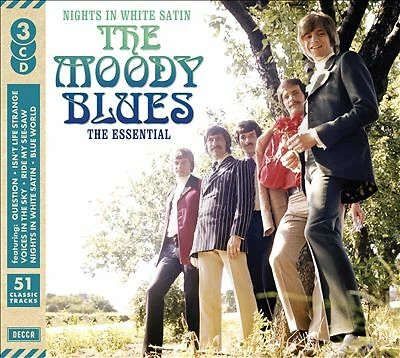
Days of Future Passed
- The immortal ‘Nights In White Satin’ and the rock stylings of ‘Peak Hour’, coupled with classical interludes that (apologies to Peter Knight) veer on the mediocre.
In Search Of The Lost Chord
- Legend Of A Mind’, ‘Ride My See-saw’ were fine examples of the best in psychedelic rock (Mike Pinder’s innovative use of the Mellotron well to the fore) but you also had to cope with the rather twee ‘Voices Of Paradise’.
I won’t repeat the above for the remaining core albums as I am sure you can see a theme emerging. So, why do I still defend them (or me)? Well, I guess we have to look beyond what I perceive as the occasional lightweight lapse and see the albums as thematic wholes. The group as a collective were I think masters of technique and timing. They played with heart and feeling rather than pounding the instruments in mindless drivel that lacked any meaning (even if the meaning could on certain instances appear a little superficial). If you take “To Our Childrens Childrens Children” for me one of the most introspective and hardest to get to know of their earlier albums, it is actually crammed full of all kinds of great music. In addition, the great thing about the Moody Blues is that the ‘hits’ (loosely applied) may not actually be the greatest music they ever did…What about ‘Dawning is the Day’, “Melancholy Man”, ‘One More Time To Live’, ‘Dear Diary’, ‘Are You Sitting Comfortably’, ‘Story In Your Eyes’ ‘Lovely To See You’ etc. etc. Pound for pound, the Moodies provided an array of emotions in a sophisticated musical framework. Their albums will always be an important part of my record collection – which is why this particular numpty bought all the remastered CDs of the Core 7, all replete with extra tracks.
In the end, I think it is this – we have the general, overall sound of the group that suffice to say, was not the typical sound of a normal rock band, so if you’re in the market for kick ass rock and roll tunes this isn’t the place to come. It’s not that Hayward was at all bad on his guitars or that Lodge was a poor bass player, and Edge was actually very solid on drums. It’s just these were not the primary catalysts of the group’s sound. First, Ray Thomas was one of a VERY select few to make extensive use of the flute in pop music. Now, he didn’t use it in the Ian Anderson make-the-flute-as-the-guitar manner, but rather he used it for pure melodic beauty and to add to the grandeur of the tunes. Even more predominant in the sound, however, was the mellotron of Mike Pinder. The very fact that he had such skill in controlling and taming the mellotron in and of itself qualifies him as one of the great underrated keyboardists of all time (remember this is 1967/68). Indeed, the mellotron has always been considered one of the greatest, most monstrous enemies of keyboard players through the ages, and most of today’s developments in synth sound were driven for the sole purpose of putting the mellotron in the past.
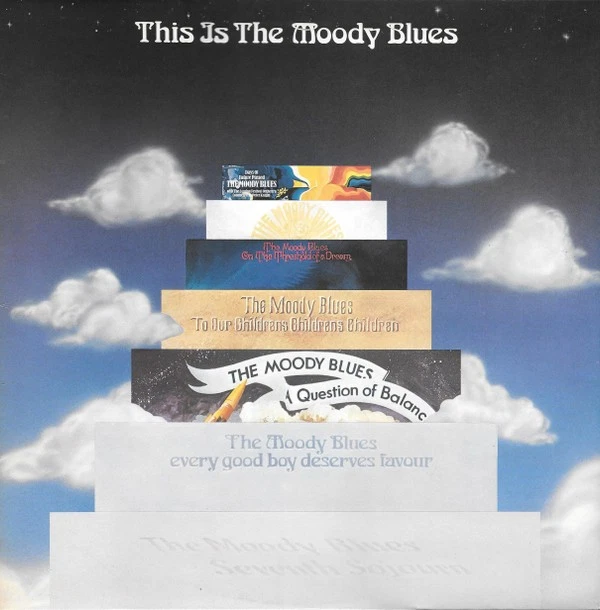
But I’m not blind to the weaknesses that loyal devotees prefer to gloss over – the main failing of the Moody Blues was that their work was extremely formulaic and most definitely had a set style. A grandiose intro, maybe a poem, a ‘rocker’, the main body of the album, and a closing piece to bring it all together. (Note that this synopsis refers primarily to the ‘core seven’). On the other hand, though, I don’t think that’s a completely bad thing. Sure, diversity is nice, but I’m not a stickler about change for change’s sake. They had a formula, and an extremely successful one at that, and they managed to squeeze every last ounce of melodic and lyrical beauty that they could out of it.
Overall then, I like to think I’ve presented a balanced and reasonably nuanced argument for my guilty pleasure. If however, you think the general attitude of the band had nothing to do with the guts of rock music, which in the 70s in particular was of course ultimately about getting high, screwing groupies and beating people up, then I guess that what I find endearing, others would find utterly repulsive; and they do/did, as one or two of my school mates took no time in telling me in 1975!!!
That’s what makes it so conflicting. Very strong albums with a tendency to sweetness make it difficult to suggest universal acclaim but I make no apologies for suggesting that the positives far outweigh the negatives. But I do hear the other opinions and can see the case for displeasure.
But if we were talking about Procol Harum, then I brook no argument – to paraphrase a US Band’s 1976 punk rock anthem I’d have to ‘Beat on the brat with a cricket bat‘ 🏏🏏at such insurgency and rank indifference.