
A last minute decision to see Kafka’s Metamorphosis in Colchester on the Wednesday night became an overnighter with the addition of a very pleasant break at the Greyfriars hotel, last stayed at earlier in the year as part of Mrs. No Names’ ‘birthday bash’! As far as I can determine, this was our first theatre production since 2018, so a welcome if very belated return.
Metamorphosis was an interesting but somewhat confusing experience. I hadn’t read the novella (The Castle and The Trial both finished but no help whatsoever!). This was a new adaptation by BAFTA nominated poet, playwright and broadcaster Lemn Sissay and Frantic Assembly’s Artistic Director Scott Graham. The accompanying blurb suggests a “powerful and vital depiction of humans struggling within a system that crushes them under its heel. The lead character finds himself transformed from breadwinner into burden in this absurd and tragic story. Frantic Assembly is renowned for its use of physicality and movement and Metamorphosis will be an inherently visceral production about the limitations of the body and mind, imagination and aspiration. All of this, coupled with the fluidity and lyricism of Lemn Sissay’s adaptation, promises an exciting and dynamic show“. Quite liked the approach, although I still thought that it lends itself to both interpretation and ambiguity – which, judging by the critiques of the original novella from any number of commentators, is far from a singular conclusion !
We had a lovely pre-theatre evening meal at the hotel and an equally satisfying breakfast the next morning. A morning stroll round Colchester, including a fleeting visit to St Helen’s Chapel, an Eastern Orthodox church whose small interior proved far more illuminating than the poor photos I managed to take of the interior and exterior; needs must I guess.
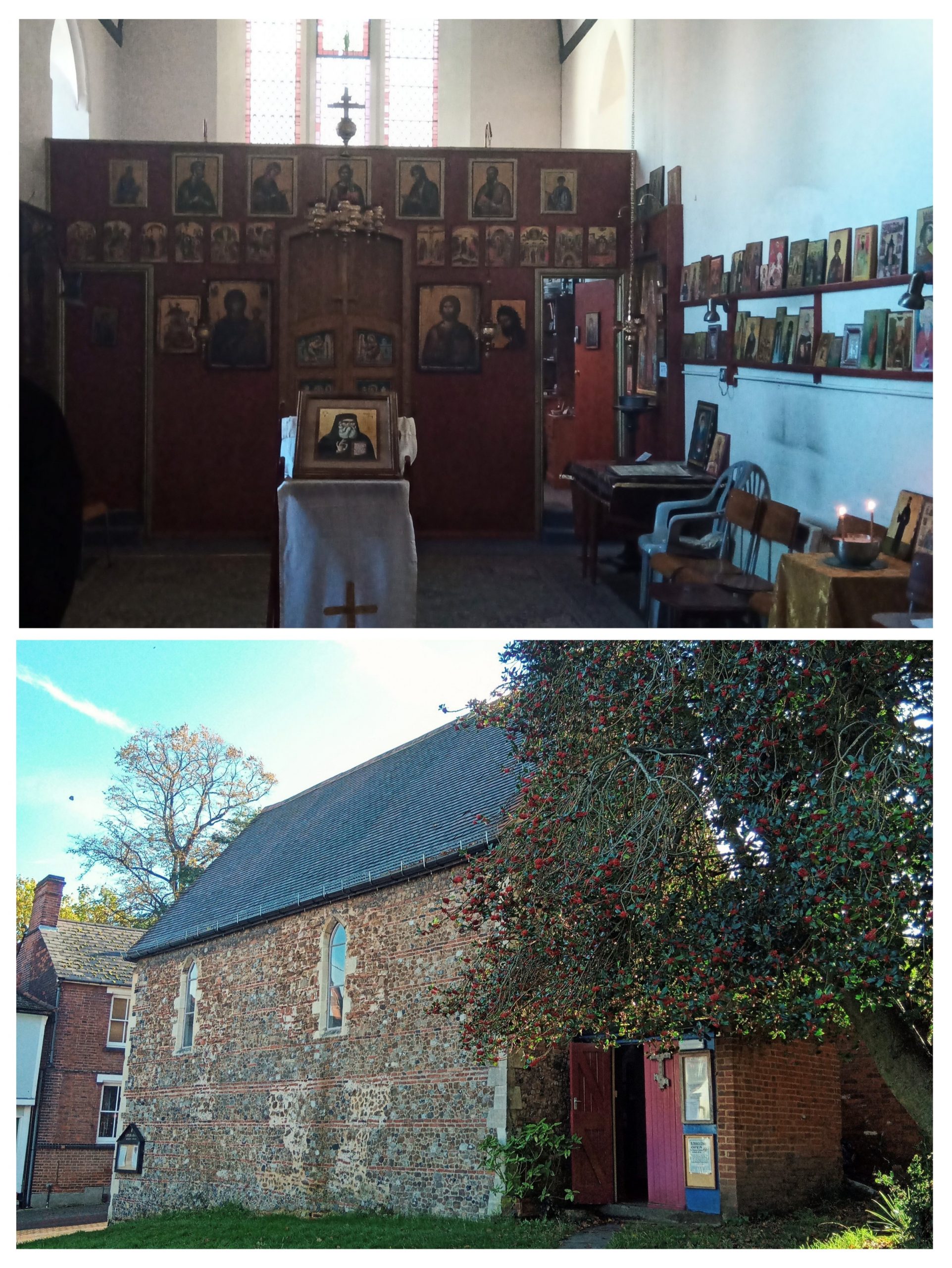
It has an interesting history. In the 16th century, after the Protestant Reformation, St Helen’s Chapel ceased to be used for worship and instead was used for secular use as a school, library, and workshop. In the 18th century, the chapel began to be used as a Quaker meeting house and later a Church Hall. In 1886, the Round family, who also owned Colchester Castle, purchased the chapel, and hired famous architect William Butterfield to restore it. Very little of the original stonework exists however, excluding a few decorative Roman bricks. Since the 24th of February 1950, the chapel has been Grade II listed on the National Heritage List for England. In 2000, after 500 years, the chapel was restored by the local Eastern Orthodox parish.
Two purchases by Mrs.No Name in the Hobbs franchise in Fenwicks and then it was back home by mid afternoon!