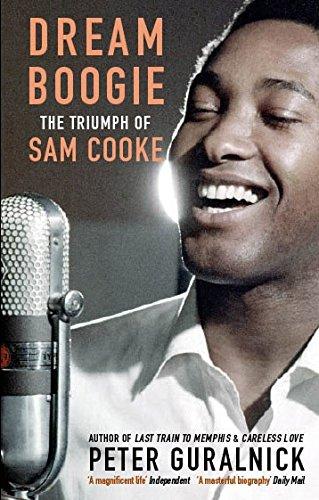
Another port from the original site and the second offering from Guralnick. But, given it’s length and quite dense prose, is it a stretch too far? Most visitors to Shades of Blue will know that the site is a big fan of Peter Guralnick and his ability to combine a frighteningly detailed knowledge of American popular music with such a lucid and effortless writing style. So it’s a major event when he puts pen to paper again, especially when the subject matter is such an icon of the R&B; and early soul music of the late 1950s and 1960s.
 Arthur Alexander is a long time favourite of mine and I believe this is the first attempt to analyse at length the life and work of a complex and incredibly talented individual. Younger illustrates the highs, lows and inconsistencies of the man and his music and, in telling the story of this great performer and writer, he also provides the reader with the wider context.
 Nager’s book (subtitled “The Lives and Times of America’s Musical Crossroads”) paints on a broader canvas than many books about southern music and is therefore an excellent introduction to the wider aspects of the Memphis sound. A cultural mixing board, where black and white folk have done musical business for two centuries or more.

 He was around at the start of one of the great periods in American popular music. He had a direct and leading influence on some of the most exciting music ever recorded. He was a partner in Atlantic Records, which is possibly the greatest example of an independent record company that was run by music enthusiasts but managed to be commercially viable.
 Grammy Award-winning historian Rob Bowman discloses the behind-the-scenes deals and business transactions that contributed to the rise and fall of Stax Records. It appears to tell the real inside story of the landmark label. Written with such authority that you feel you’re almost there in the studios which produced all that great music.
  If you read one work about Rhythm and Blues (and rock and roll), this probably has to be it. The book has its origins in a Masters thesis as far back as 1966. This background probably accounts for the fact that it is structurally sound and possessed of proper depth which is often lacking in publications of this type – but don’t be put off, the book is immensely readable.
 Peter Guralnick is a writer of some of the finest books on popular music – I could just as easily have recommended “Feel Like Going Home” and “Lost Highway”, profiles of some of the most interesting musicians in American popular music. This one is subtitled ‘Rhythm and Blues and the Southern Dream of Freedom’, which aptly sums up the book’s heart.