

Eva Cassidy didn’t have long to make her mark before cancer took her but the recorded legacy, though relatively sparse, is evidence enough of a great, maybe unique talent. Born into an artistic family, music was only one of a number of personal loves and she undertook many artistic endeavours in her short life, including painting, drawing, jewellery design and sculpture. All the more remarkable then, that the music she left behind was so well formed and fully realised.
Her father taught her the rudiments of guitar technique and introduced her to folk music, a love of which stayed with her throughout her life. Although she sang from early in her life, it seems clear that she was not particularly interested in pursuing a professional career, happy enough to get gigs as a back-up singer. However, she did produce some demo tapes along the way and, fortuitously, these were heard by Chuck Brown, with whom she subsequently made an album (“The Other Side”) in 1992.
Attempts to secure Eva a record deal of her own failed – not for the first time, record labels were confused by an artist’s eclectic approach and jazz, folk, blues, gospel and standards all featured in Eva’s repertoire. Instead, therefore, Eva’s music was showcased on a live, self-produced (with long time admirer Chris Biondo) CD “Live At Blues Alley“. Apparently at the time she was unhappy with the results but it’s hard to see why – it’s not often we get to hear ‘Cheek To Cheek’, ‘Autumn Leaves’ and other standards co-existing so happily with interpretations of ‘People Get Ready’, ‘Bridge Over Troubled Water’ and ‘Take Me To The River’. It was rightly hailed at the time as one of the finest solo debuts of the period and sold well regionally despite minimal promotion and advertising.
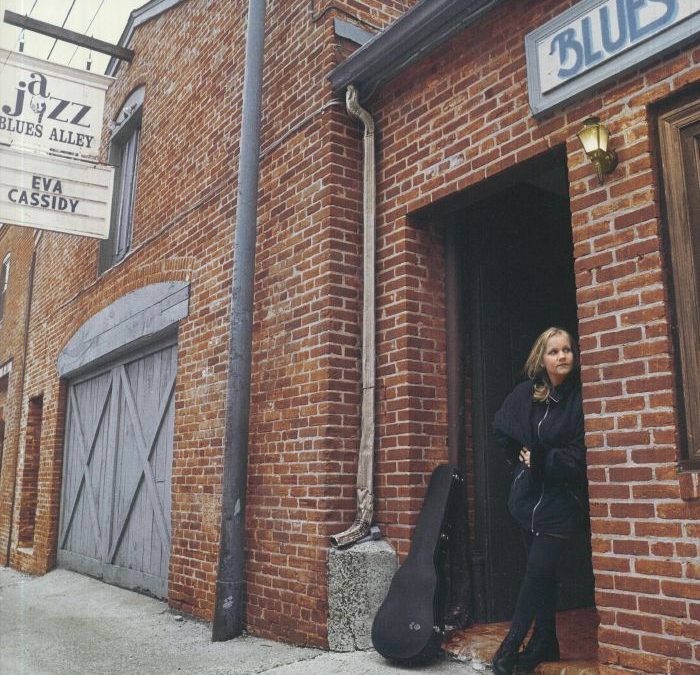
As part of the compromise which led to Cassidy agreeing to the release of the live CD, everyone had agreed to immediately begin work on a studio follow up, which was eventually released posthumously as “Eva By Heart“, a truly astonishing album of tremendous depth and variety. Much of the material was recorded at a time when Eva was already well aware of her illness and credit must also go to Chris Biondo for the way he put the finished product together for official release. Superb interpretations of traditional material (‘Wayfaring Stranger’) sat comfortably alongside blues standards (‘Blues In The Night’, ‘Need Your Love So Bad’) and more contemporary material (Christine McVie’s ‘Songbird’) – all performed with an emotional depth rare in popular music. Cassidy also had great intonation and control and the whole sound is complemented by sympathetic accompaniment, including her own fine guitar and piano playing. The album is a delight from start to finish (it’s re-promotion in the UK includes a bonus and uncredited version of ‘Dark End Of The Street’). There is a compilation of her two official releases (“Songbird“) but everyone should really indulge in the two original albums. The 2000 CD release “Time After Time” focuses on previously unavailable material and is a fine showcase for Cassidy’s wonderful take on other people’s material (including Paul Simon, Joni Mitchell, Bill Withers and, erm… Cindi Lauper!). If you want to investigate the wonderful and apparently often undervalued art of song interpretation, look no further. Further releases of what was basically demo material have followed and the law of diminishing returns has inevitably kicked in, but there was always something to enjoy, even so. Now of course, there is only one way into Cassidy’s music and that is the remastered and extended reissue of “Live At Blues Alley“, a 25th Anniversary Edition and now a double CD – in my opinion, the remastering has brought out the recording’s great separation between the instruments and clear sound stage… although it was most likely (definitely) pressed from a digital source, it has been mastered really well and is the essential purchase.
The Primer was always slightly uncomfortable jumping on what seemed like a Cassidy bandwagon following Eva’s untimely death but such worries are far outweighed by a desire to publicise her undeniable talents – anyone with an interest in blues, folk and R&B should investigate immediately.
As Shirley Horn stated so simply – “What a Voice“