
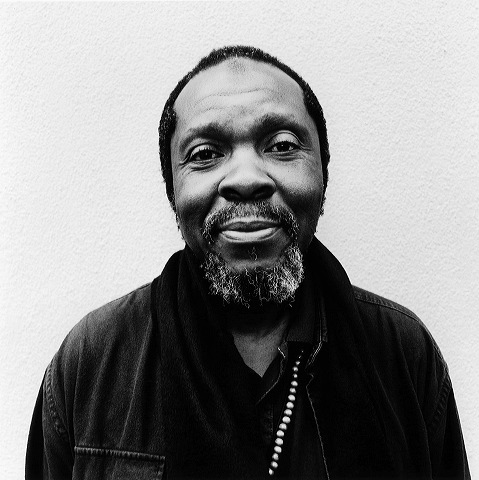
Callier was born on the North Side of Chicago, Illinois, and was raised in the Cabrini–Green housing area. Partly inspired by his mother’s enthusiasm for singers such as Ella Fitzgerald and Billie Holiday, he sang in amateur doo-wop groups in his teens, and found himself in the midst of a remarkable group of local musicians including Curtis Mayfield, Jerry Butler and Ramsey Lewis. He learned piano, was a childhood friend of Curtis Mayfield, Major Lance and Jerry Butler, and began singing in doo-wop groups in his teens.
In 1962, he took an audition at Chess Records, where he recorded his debut single, ‘Look at Me Now’. While attending college, he began performing in folk clubs and coffee houses in Chicago, becoming strongly influenced by the music of John Coltrane. During this period, he briefly performed in a duo with David Crosby in Chicago and New York City.
He met Samuel Charters of Prestige Records in 1964; the following year, they recorded his debut album, “The New Folk Sound of Terry Callier“. Featuring just an acoustic guitar, two bass players (an idea Callier borrowed from the jazzman John Coltrane no less) and Callier’s gentle but hugely expressive voice, the album stands today as a minor masterpiece. However, it was not actually released until 18 months later because in the meantime Charters had disappeared to Mexico, taking the master tapes with him. ‘Look at Me Now’, Callier’s debut single, came in 1968, when he signed with Chicago’s renowned blues label, Chess. This period is represented by a few compilations. The one I own is called “Essential: The Very Best Of” and it has quite a few unreleased tracks that will appeal to the Callier afficionado. To be honest though, this is not to me what makes Callier one of my favourite jazz / soul vocalists and songwriters, as I personally much prefer the ‘comeback’ material of the 1990s and early 2000s.
He continued to perform in Chicago; in 1970, he joined the Chicago Songwriters Workshop set up by Jerry Butler. He and partner Larry Wade wrote material for Chess and its subsidiary Cadet label, including The Dells’ 1972 hit ‘The Love We Had Stays on My Mind’, as a result of which he was awarded his own recording contract with Cadet as a singer-songwriter. Three critically acclaimed but commercially unsuccessful albums followed, produced by Charles Stepney: “Occasional Rain” (1972), “What Color Is Love” (1972), and “I Just Can’t Help Myself” (1973). These demonstrated that Callier’s influences included soul, jazz, funk, psychedelia, and classical music. Subsequently, he toured with George Benson, Gil Scott-Heron and others. Cadet and its parent label Chess were sold in 1976 and Callier was then dropped from the label. The Songwriters Workshop closed in 1976.
The following year, Don Mizell signed him to a new contract with his Jazz Fusion Division at Elektra Records, resulting in the R&B-oriented “Fire On Ice” (1977) and “Turn You to Love” (1978). The opening track of the latter album, ‘Sign Of The Times’, was used as the theme tune of radio DJ Frankie Crocker and became Callier’s only US chart success, reaching No. 78 on the R&B chart in 1979. The single prompted his appearance at the Montreux Jazz Festival, where Mizell presented him in the Elektra Jazz Fusion Night showcase alongside Grover Washington, Dee Dee Bridgewater and Lee Ritenour. When Mizell moved on to work with Stevie Wonder in 1980, Callier was dropped from the label.
Callier continued to perform and tour until 1983, when he gained custody of his daughter and retired from music to take classes in computer programming, landing a job at the University of Chicago and returning to college during the evenings to pursue a degree in sociology. He re-emerged from obscurity in the late 1980s, when British DJs discovered his old recordings and began to play his songs in clubs. Acid Jazz Records head Eddie Piller reissued a little-known Callier recording from 1983, ‘I Don’t Want to See Myself (Without You)’, and brought him to play clubs in Britain. From 1991 he began to make regular trips to play gigs during his vacation time from work.
In the late 1990s, Callier began his comeback to recorded music, collaborating with Urban Species on their 1997 EP Religion and Politics and contributed to Beth Orton’s Best Bit EP in 1997 before releasing the album “Timepeace” in 1998, which won the United Nations’ Time For Peace award for outstanding artistic achievement contributing to world peace. His colleagues at the University of Chicago did not know of Callier’s life as a musician, but after the award the news of his work as a musician became widely known and subsequently led to his dismissal by the University.
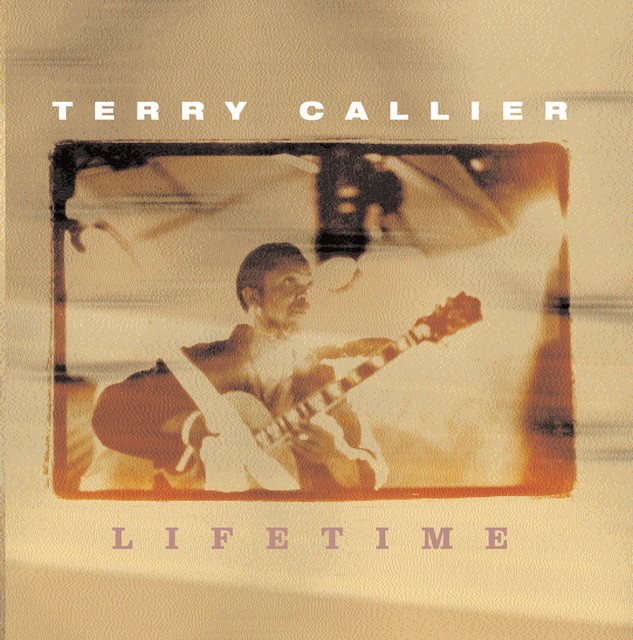
As well as touring internationally, Callier continued his recording career, releasing five albums after Timepeace, including “Lifetime” (1999), “Alive” (2001), “Speak Your Peace” (2002), featuring Paul Weller on the single ‘Brother to Brother’ and “Lookin’ Out” (2004). May 2009 saw the album “Hidden Conversations” featuring Massive Attack released on Mr Bongo records. It proved to be his last recording, some three years before his death, and some would argue it’s a fitting end – it did indeed embrace soul, electronica, blues and funk but even so I prefer the three release ‘comeback trilogy’, starting with “Timepeace”!
Callier died after a long battle with throat cancer on October 27, 2012, aged 67